


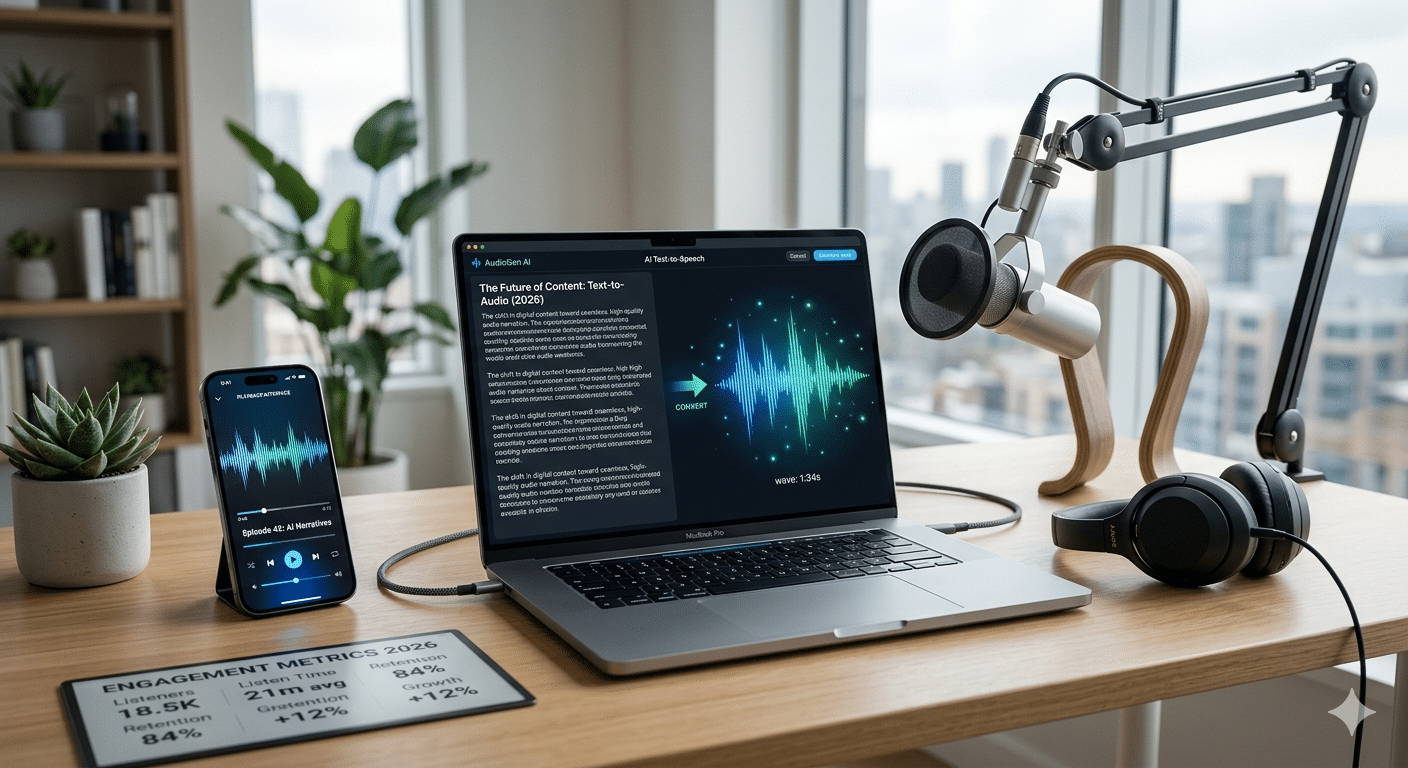
Content to audio conversion is transforming how information is created, distributed, and consumed. As audiences increasingly prefer on-the-go content, businesses and creators are turning written materials into audio formats to expand reach, improve accessibility, and boost engagement. Whether it’s blog posts, articles, or reports, converting content into audio allows users to listen anytime, anywhere.
This guide will walk you through everything you need to know about building an effective content to audio conversion strategy in 2026.
What Is Content to Audio Conversion?
Content to audio conversion is the process of transforming written or visual content into audio format. This can be done using:
- Text-to-speech (TTS) technology
- Human voice recordings
- AI-generated narration tools
The goal is to make content more accessible and convenient for users who prefer listening over reading.
Why Content to Audio Conversion Matters in 2026
The demand for audio content continues to grow due to changing user behavior and technology advancements.
1. Increased Content Accessibility
Audio allows users to consume content while multitasking—driving, exercising, or working.
2. Improved User Engagement
Audio creates a more personal and immersive experience compared to text alone.
3. Broader Audience Reach
You can reach users who prefer listening or have visual impairments.
4. SEO Benefits
Audio content, when paired with transcripts, can improve search visibility and dwell time.
5. Competitive Advantage
Many websites still rely solely on text, making audio an opportunity to stand out.
Types of Content You Can Convert to Audio
A successful strategy includes multiple content formats.
Blog Posts
Turn your articles into audio versions to increase time-on-page.
News and Updates
Provide quick audio summaries for busy audiences.
Educational Content
Convert guides, tutorials, and courses into audio lessons.
Ebooks and Long-Form Content
Transform written materials into audiobooks.
Marketing Content
Use audio for storytelling, brand messaging, and promotions.
Methods of Content to Audio Conversion
1. AI Text-to-Speech (TTS)
AI-powered tools can convert text into natural-sounding speech quickly and efficiently.
Pros:
- Fast and scalable
- Cost-effective
- Easy to update
Cons:
- May lack emotional tone
- Requires fine-tuning for quality
2. Human Voice Recording
Recording real voice narration offers a more authentic experience.
Pros:
- High emotional engagement
- Strong brand voice
Cons:
- Time-consuming
- Higher production cost
3. Hybrid Approach
Combine AI efficiency with human editing for the best results.
How to Build a Content to Audio Conversion Strategy
Step 1: Define Your Goals
Identify what you want to achieve:
- Increase engagement
- Improve accessibility
- Boost SEO performance
- Expand audience reach
Step 2: Choose the Right Content
Start with high-performing or evergreen content. This ensures maximum ROI.
Step 3: Select the Right Tools
Choose tools that support:
- Natural voice output
- Multiple languages
- Easy integration
- High-quality audio export
Step 4: Optimize Audio Quality
Ensure:
- Clear pronunciation
- Balanced sound levels
- Minimal background noise
Step 5: Add Transcripts
Transcripts improve:
- Accessibility
- SEO indexing
- User experience
Step 6: Distribute Your Audio
Publish across:
- Your website
- Podcast platforms
- Social media
- Email campaigns
Best Practices for Content to Audio Conversion
Keep It Conversational
Write content that sounds natural when spoken.
Break Content Into Sections
Short segments improve listener retention.
Use Clear Structure
Headings and transitions help guide listeners.
Maintain Consistency
Regular updates build audience loyalty.
Optimize for SEO
Use keywords naturally in titles, descriptions, and transcripts.
Common Mistakes to Avoid
Poor Audio Quality
Low-quality sound reduces credibility.
Overly Complex Language
Complicated text is harder to understand when spoken.
Ignoring User Experience
Long, unstructured audio can lose listener interest.
Lack of Promotion
Audio content needs visibility to perform.
SEO Benefits of Content to Audio Conversion
Content to audio conversion strengthens your SEO strategy by:
- Increasing time on page
- Enhancing accessibility signals
- Providing additional indexed content through transcripts
- Supporting featured snippets
Audio complements written content and improves overall performance.
Tools for Content to Audio Conversion
Popular tools include:
- AI text-to-speech platforms
- Audio editing software
- Podcast hosting platforms
- Content management systems with audio support
Choose tools that align with your workflow and goals.
Future Trends in Content to Audio Conversion
AI Voice Advancements
AI is rapidly transforming how content is converted into audio, making the process faster and more realistic than ever. Many of the Best AI tools in 2026 now offer lifelike voice generation, multilingual capabilities, and advanced customization that allow creators to scale audio production efficiently.
Personalized Audio Content
Content tailored to user preferences and behavior.
Multilingual Audio
Expanding reach through multiple language support.
Interactive Audio
Users engaging with content through voice commands.
How Content to Audio Conversion Fits Into Your Strategy
This approach integrates with:
- SEO: Improves visibility and engagement
- Content Marketing: Expands formats and reach
- Voice Search: Aligns with conversational queries
- User Experience: Enhances accessibility
Conclusion
Content to audio conversion is a powerful way to future-proof your content strategy. As user behavior shifts toward audio consumption, businesses that adapt will gain a significant advantage.
By leveraging AI tools, optimizing for SEO, and focusing on user experience, you can transform your written content into engaging audio that reaches a wider audience and drives meaningful results.
The future of content is flexible, accessible, and audio-driven. Now is the time to embrace it.