


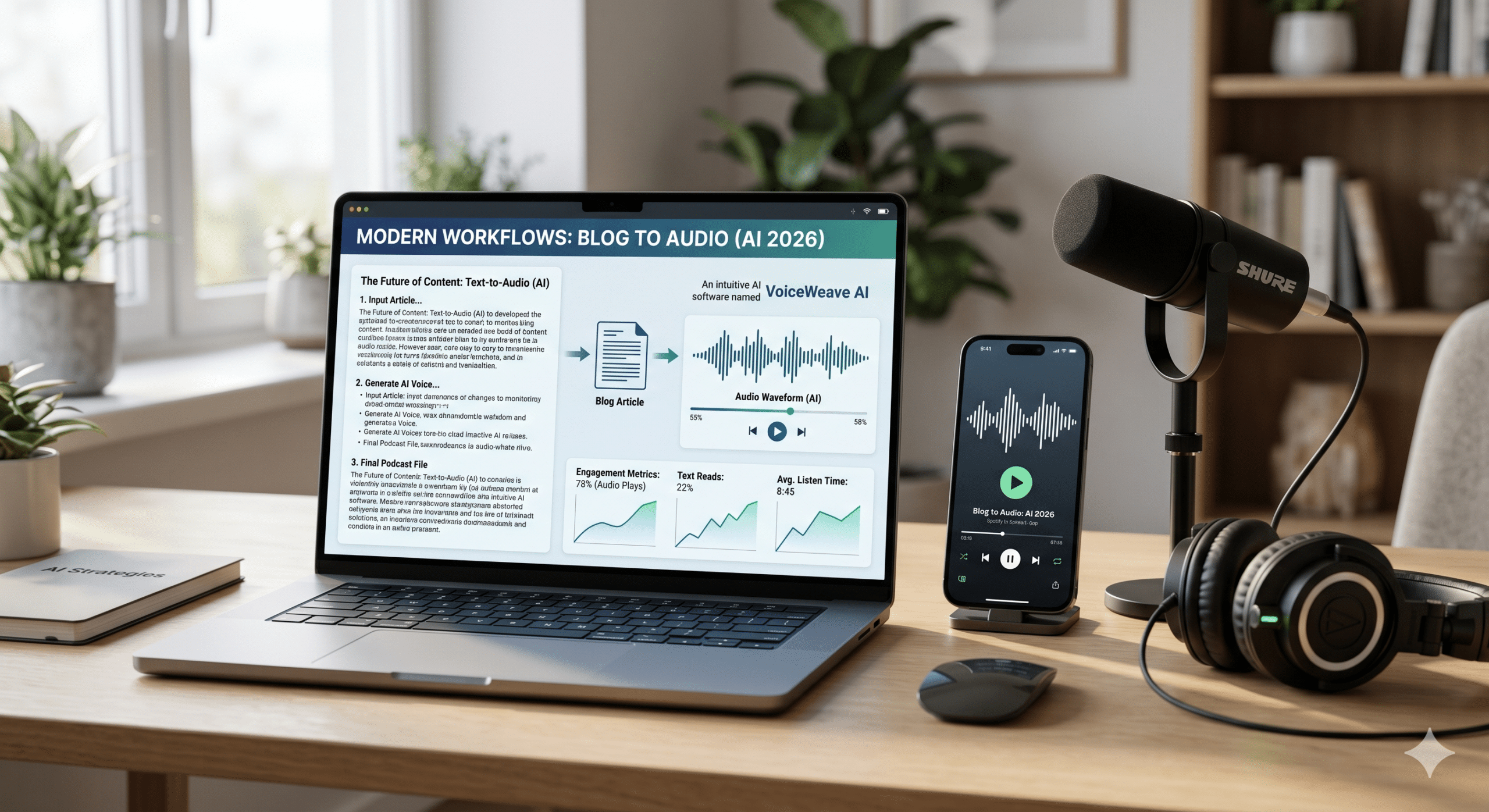
Content consumption is evolving fast, and audiences no longer rely solely on reading. Many users prefer listening while commuting, exercising, or multitasking. This shift has made blog to audio conversion a powerful strategy for modern content creators and businesses.
Instead of letting valuable blog posts sit unread, converting them into audio unlocks new reach, improves accessibility, and strengthens engagement. This guide will walk you through how to implement a high-performing blog-to-audio workflow that is both SEO-friendly and scalable.
What Is Blog to Audio Conversion?
Blog to audio conversion is the process of transforming written blog content into spoken audio format. This can be achieved using:
- AI text-to-speech tools
- Human narration
- Hybrid production workflows
The result is an audio version of your blog that users can listen to on-demand across devices.
Why Blog to Audio Conversion Matters in 2026
1. Expands Content Accessibility
Audio allows users to consume your content without reading, making it ideal for busy audiences and those with visual impairments.
2. Increases Engagement Time
Visitors who listen to your content often stay longer on your site, improving key engagement metrics.
3. Reaches New Audiences
Some users prefer audio-first platforms, including podcast apps and streaming services.
4. Enhances SEO Performance
Audio combined with transcripts can improve indexing, dwell time, and keyword relevance.
5. Maximizes Content ROI
Instead of creating new content, you repurpose existing blogs into a new format.
How Blog to Audio Conversion Works
The process is straightforward but requires attention to quality and structure.
Step 1: Select the Right Blog Content
Focus on:
- High-performing posts
- Evergreen content
- Educational or tutorial-based articles
Step 2: Prepare the Content for Audio
Written content does not always translate directly to speech. Adjust it by:
- Simplifying complex sentences
- Adding natural transitions
- Removing unnecessary formatting
Step 3: Choose a Conversion Method
AI Text-to-Speech
Fast and scalable, ideal for large content libraries.
Human Narration
More natural and engaging, but time-intensive.
Hybrid Approach
AI-generated audio refined with human editing.
Step 4: Optimize Audio Quality
Ensure:
- Clear pronunciation
- Balanced sound levels
- Clean editing
Step 5: Publish and Distribute
Share your audio across:
- Your website (embedded player)
- Podcast platforms
- Social media
- Email newsletters
Best Practices for Blog to Audio Conversion
Write for Listening
Use conversational language that sounds natural when spoken.
Keep It Structured
Break content into sections with clear transitions.
Use Short Sentences
Simpler sentences improve clarity and comprehension.
Add Personality
Even AI-generated audio should feel human and engaging.
Include a Call to Action
Guide listeners toward the next step, such as visiting your site or subscribing.
Common Mistakes to Avoid
Using Raw Blog Content
Not adapting text for audio can make it sound unnatural.
Poor Audio Quality
Background noise or robotic voices reduce credibility.
Overloading Information
Long, dense audio can overwhelm listeners.
Ignoring Distribution
Publishing audio without promotion limits its impact.
SEO Benefits of Blog to Audio Conversion
Blog to audio conversion supports SEO in several ways:
- Improved dwell time: Users stay longer when listening
- Better accessibility signals: Inclusive content improves rankings
- Additional keyword indexing: Transcripts enhance search visibility
- Content diversification: Multiple formats increase engagement
Tools for Blog to Audio Conversion
To streamline your workflow, use tools that support:
- Text-to-speech generation
- Audio editing and enhancement
- Hosting and distribution
- Analytics tracking
Look for platforms that offer natural voices and easy integration with your content system.
Advanced Strategies for 2026
1. Personalization
Deliver audio content tailored to user preferences and behavior.
2. Multilingual Conversion
Expand your reach by offering audio in multiple languages.
3. AI Voice Customization
Use branded voices to create a consistent identity.
4. Interactive Audio
Allow users to navigate or respond to content using voice commands.
How Blog to Audio Fits Into Your Content Strategy
Blog to audio conversion should not stand alone. It works best when integrated with:
- SEO: Boost rankings through transcripts and engagement
- Content Marketing: Repurpose blogs into multiple formats
- Audio Strategy: Build a library of on-demand listening content
- User Experience: Offer flexible consumption options
Converting written content into audio requires a structured approach that balances clarity and engagement. A practical example can be seen in how brands Convert Your Blog Into an Audio Article, using streamlined workflows that transform text into high-quality, listenable content.
Real-World Use Cases
Educational Platforms
Convert tutorials into audio lessons for better accessibility.
Business Blogs
Turn thought leadership articles into podcast-style content.
News Websites
Provide audio summaries for quick updates.
E-commerce Brands
Use audio storytelling to enhance product marketing.
Future Trends in Blog to Audio Conversion
AI Voice Realism
Voices will become more natural and emotionally expressive.
Automated Workflows
End-to-end systems will handle conversion, publishing, and promotion.
Voice Search Integration
Audio content will align more closely with conversational queries.
Cross-Platform Distribution
Seamless publishing across web, apps, and smart devices.
Conclusion
Blog to audio conversion is no longer optional—it is a strategic advantage in 2026. As audiences demand more flexible and accessible content, transforming blogs into audio helps you stay relevant, expand your reach, and improve engagement.
By focusing on quality, structure, and SEO optimization, you can turn your existing content into a powerful audio experience that delivers long-term value.
The future of content is not just written—it is heard. Start converting your blogs into audio and unlock new opportunities for growth.