


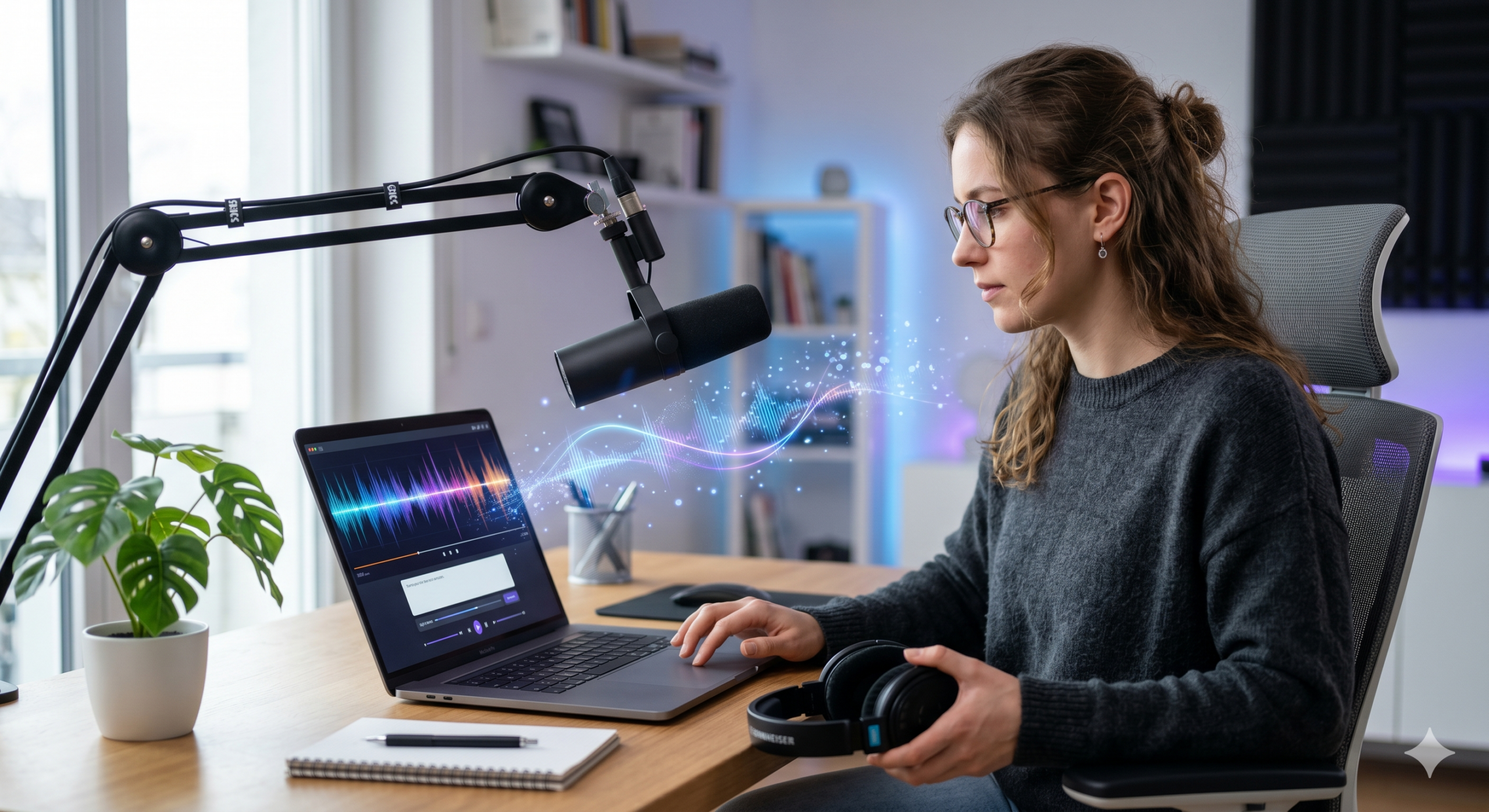
The way we consume content is rapidly evolving. As audio becomes more popular across platforms, the ability and has become an essential capability for businesses, developers, and content creators. Whether for accessibility, content scaling, or user engagement, modern AI-powered solutions make it easy to transform written text into natural, human-like speech.
In 2026, converting text into audio is no longer limited to basic robotic voices. Advanced artificial intelligence now enables realistic, expressive, and multilingual voice generation at scale. This guide explores how to convert text to audio, the technology behind it, and how to use it effectively.
What Does It Mean to Convert Text to Audio?
To convert text to audio means transforming written content into spoken words using text-to-speech (TTS) technology. Modern systems rely on artificial intelligence to generate speech that sounds natural and engaging.
These solutions are widely used for:
- Voiceovers and video narration
- Audiobooks and podcasts
- Accessibility tools
- Customer service automation
Today’s tools are available as cloud platforms, APIs, and standalone applications, making them accessible to both technical and non-technical users.
How Text to Audio Conversion Works
Understanding how systems convert text to audio helps explain why modern outputs sound so realistic. Advanced AI models are trained on large datasets of human speech to generate natural and expressive audio output. Exploring modern text-to-speech AI tools reveals how these systems now incorporate tone, emotion, and contextual understanding to produce highly realistic speech.
Text Processing
The system analyzes the input text, including punctuation and structure, to determine how it should be spoken.
Phoneme Conversion
Words are broken down into phonemes to ensure accurate pronunciation.
Neural Voice Synthesis
Deep learning models generate speech patterns based on large datasets of human voices.
Audio Output
The system produces a natural-sounding audio file or real-time stream.
This process allows modern tools to deliver smooth and human-like speech.
Key Benefits When You Convert Text to Audio
Using tools to convert text to audio offers several advantages.
Improved Accessibility
Audio content makes information accessible to users with visual impairments or reading difficulties.
Enhanced Engagement
Listeners often find audio more engaging than text alone.
Faster Content Creation
Audio can be generated instantly without recording or editing.
Cost Efficiency
Eliminates the need for voice actors and production studios.
Scalability
Large volumes of content can be converted into audio quickly.
Common Use Cases
The ability to convert text to audio is valuable across many industries.
Content Creation
Creators use AI voices for YouTube videos, podcasts, and social media.
E-Learning
Educational platforms provide narrated lessons and training materials.
Customer Support
Businesses automate voice responses and call handling.
Marketing
Brands create voiceovers for ads and product demos.
Healthcare
Voice systems assist with patient communication and documentation.
Tools to Convert Text to Audio in 2026
Several platforms make it easy to convert text to audio efficiently.
ElevenLabs
Known for highly realistic voices and advanced voice cloning.
Amazon Polly
A scalable cloud-based solution with multilingual support.
Google Cloud Text-to-Speech
Offers powerful APIs and high-quality neural voices.
Microsoft Azure Speech
Provides enterprise-grade features and customization.
Murf AI
User-friendly platform for content creators and marketers.
Features to Look For
When choosing a solution to convert text to audio, consider these features.
Voice Quality
Look for natural, human-like speech output.
Customization
Adjust pitch, speed, and tone to match your needs.
Language Support
Ensure compatibility with multiple languages and accents.
SSML Support
Allows advanced control over speech output.
API Integration
Important for developers building applications.
Real-Time Processing
Essential for live interactions and voice assistants.
Convert Text to Audio for Developers
Developers can integrate tools to convert text to audio into applications and systems.
Integration Workflow
- Send text input to the API
- Process the request using AI models
- Receive audio output
- Play or store the audio
Applications
- Voice-enabled apps
- Chatbots and assistants
- Accessibility tools
- Smart devices
Best Practices
- Optimize text for natural speech
- Use SSML for better control
- Test across multiple voices
Challenges and Limitations
While it is powerful to convert text to audio, there are some limitations.
Emotional Expression
AI voices may lack deep emotional nuance.
Pronunciation Issues
Complex words or names may be mispronounced.
Ethical Concerns
Voice cloning raises questions about misuse.
Data Privacy
Cloud-based tools require careful handling of sensitive data.
Future Trends in Text to Audio Technology
The future of tools that convert text to audio is driven by innovation.
Hyper-Realistic Voices
AI voices will become indistinguishable from humans.
Real-Time Translation
Speech systems will support instant multilingual communication.
Personalized Voices
Users will create unique voice profiles.
Edge Computing
Local processing will improve speed and privacy.
Emotion-Aware AI
Systems will adapt tone based on context and sentiment.
Best Practices for Converting Text to Audio
To get the best results when you convert text to audio, follow these expert tips.
Write Naturally
Conversational text improves output quality.
Test Multiple Voices
Choose voices that match your audience.
Use SSML
Enhance speech with pauses and emphasis.
Monitor Performance
Track engagement and optimize results.
Ensure Transparency
Inform users when AI-generated voices are used.
Conclusion
The ability has become a cornerstone of modern digital communication. By transforming written content into natural speech, businesses and creators can improve accessibility, enhance engagement, and scale content production.
As AI technology continues to advance, text-to-audio solutions will become even more powerful, offering real-time capabilities, personalized voices, and deeper emotional expression. Adopting the right tools today ensures long-term success in an increasingly audio-driven world.