

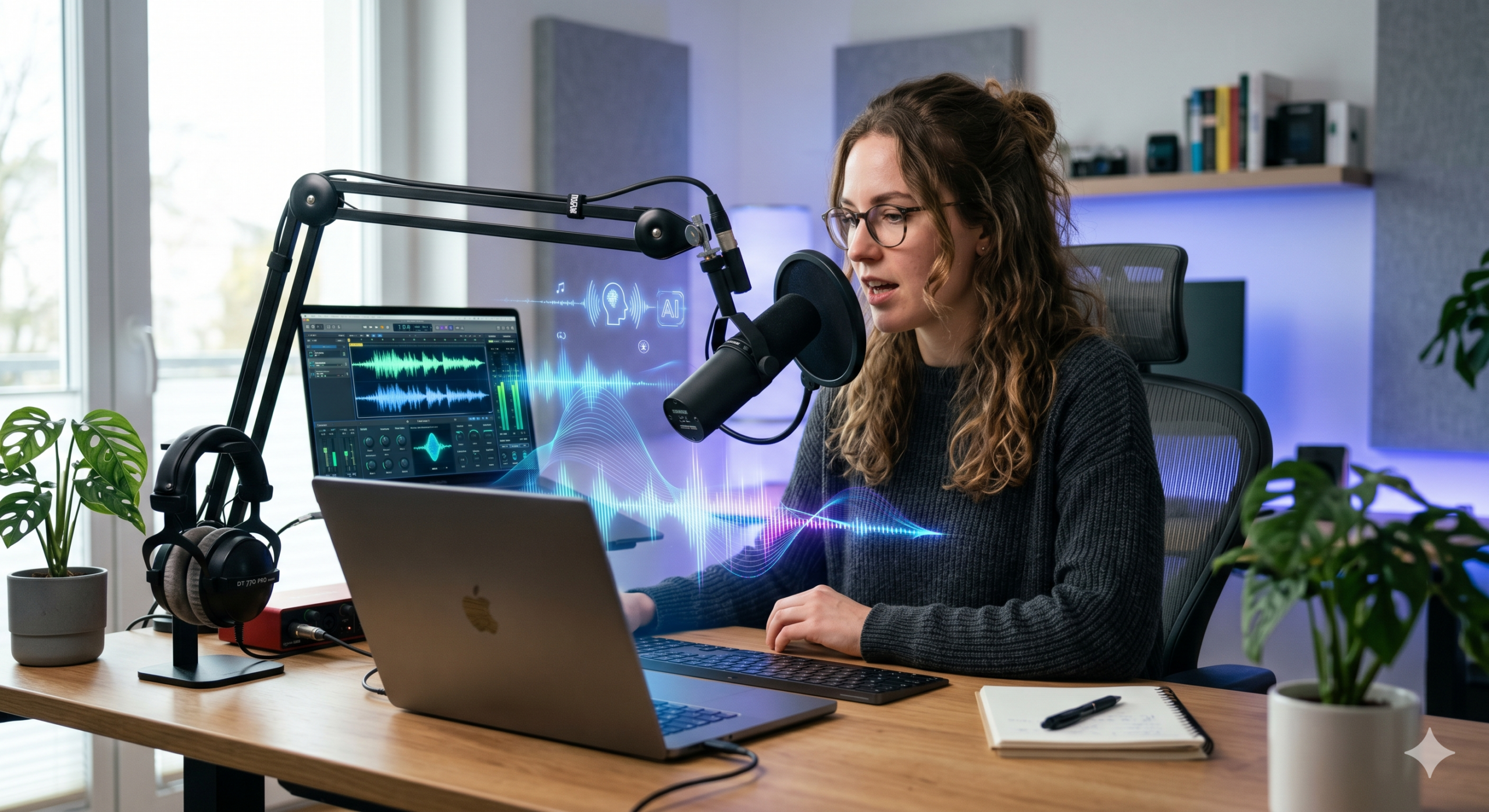
Artificial intelligence continues to reshape how we create and consume digital content. One of the most powerful innovations in this space is the AI voice generator, a technology that transforms written text into natural, human-like speech. In 2026, AI voice generators are no longer experimental tools—they are essential for businesses, developers, and creators who want to scale audio content efficiently.
From marketing and customer service to e-learning and entertainment, AI-generated voices are enhancing user experiences and enabling new forms of communication. This guide explores how AI voice generators work, their key benefits, practical use cases, and how to choose the right solution.
What Is an AI Voice Generator?
An AI voice generator is a software system that uses artificial intelligence to convert text into spoken audio. Unlike traditional text-to-speech systems that sounded robotic, modern AI voice generators rely on deep learning models and natural language processing (NLP) to produce realistic and expressive voices.
These systems can replicate:
- Human tone and emotion
- Accents and dialects
- Speech patterns and pacing
AI voice generators are commonly delivered through:
- Cloud-based platforms
- APIs for developers
- Standalone applications for creators
How AI Voice Generators Work
Understanding how an AI voice generator functions provides insight into why the technology has improved so dramatically.
Text Analysis
The system first processes the input text using NLP. It determines sentence structure, punctuation, and context to guide pronunciation and tone.
Phoneme Mapping
Words are broken down into phonemes, which are the smallest units of sound in speech. This step ensures accurate pronunciation across languages.
Neural Voice Modeling
Deep learning models, such as neural networks, generate speech patterns based on large datasets of human voices. These models capture nuances like pitch, rhythm, and intonation.
Audio Synthesis
The final stage converts the processed data into an audio waveform, producing a natural-sounding voice output.
Key Benefits of AI Voice Generators
AI voice generators offer a wide range of benefits that make them indispensable in modern workflows.
Scalability
Generate thousands of hours of audio content instantly without manual recording.
Cost Savings
Eliminate the need for voice actors, studios, and editing processes.
Consistency
Maintain a uniform voice across all content, ensuring brand consistency.
Accessibility
Make digital content accessible to users with visual impairments or reading difficulties.
Multilingual Support
Reach global audiences with support for multiple languages and accents.
Common Use Cases of AI Voice Generators
AI voice generators are widely adopted across industries due to their versatility.
Content Creation
Creators use AI voices for:
- YouTube videos
- Podcasts
- Social media content
E-Learning and Training
Educational platforms generate voiceovers for courses, tutorials, and training materials.
Customer Support
Businesses deploy AI voice bots to handle inquiries, reducing workload on human agents.
Marketing and Advertising
AI-generated voices are used for ads, product demos, and promotional videos.
Audiobooks
Authors and publishers convert written content into audiobooks quickly and cost-effectively.
Gaming and Entertainment
Developers use AI voices for character dialogue and immersive storytelling.
Types of AI Voice Generators
Different types of AI voice generators serve various needs and technical requirements.
Standard Text-to-Speech
Converts text into audio with basic voice options.
Neural Voice Generators
Use advanced AI models to produce highly realistic speech.
Voice Cloning
Replicates a specific human voice using sample recordings.
Real-Time Voice Generation
Produces speech instantly, ideal for live applications such as chatbots and virtual assistants.
Features to Look For in an AI Voice Generator
Choosing the right AI voice generator requires evaluating key features. Selecting the right platform requires careful evaluation of voice quality, customization options, and scalability. Reviewing the best AI voice generators in 2026 can help you compare features, performance, and real-world use cases before making a decision.
Voice Quality
Look for natural, human-like voices with minimal robotic tone.
Customization Options
Control pitch, speed, tone, and emphasis to match your needs.
Language Support
Ensure compatibility with your target audience’s language and accent.
SSML Support
Use Speech Synthesis Markup Language for advanced speech control.
API Integration
Developers should prioritize platforms with easy-to-use APIs.
Real-Time Processing
Low latency is essential for interactive applications.
AI Voice Generator for Developers
Developers can integrate AI voice generators into applications to enhance functionality and user experience.
Integration Workflow
- Send text input to the API
- Process the text using AI models
- Receive audio output
- Play or store the audio
Applications
- Voice-enabled apps
- Smart assistants
- Accessibility tools
- Interactive platforms
Best Practices
- Optimize text for natural speech
- Use SSML for precision
- Test outputs across different voices
Challenges and Limitations
While AI voice generators are powerful, they are not without challenges.
Emotional Nuance
AI voices may still struggle with complex emotional delivery.
Pronunciation Issues
Uncommon words and names can sometimes be mispronounced.
Ethical Concerns
Voice cloning can be misused for impersonation or deepfake content.
Data Privacy
Cloud-based solutions may require sharing sensitive information.
Future Trends in AI Voice Generators
The future of AI voice generation is rapidly evolving, with exciting advancements on the horizon.
Hyper-Realistic Voices
Voices will become indistinguishable from real human speech.
Emotion-Aware AI
Systems will adapt tone based on context and sentiment.
Real-Time Translation
Combining voice generation with translation will enable seamless global communication.
Personalized Voices
Users will create unique voice profiles tailored to their preferences.
Edge AI Processing
Offline voice generation will improve privacy and reduce latency.
Best Practices for Using AI Voice Generators
To maximize effectiveness, follow these expert recommendations:
Write Naturally
Use conversational language for better output quality.
Test Multiple Voices
Different voices suit different audiences and use cases.
Use SSML
Enhance speech with pauses, emphasis, and pronunciation control.
Monitor Performance
Track engagement and optimize based on user feedback.
Ensure Transparency
Clearly indicate when AI-generated voices are used.
Conclusion
The AI voice generator has become a cornerstone of modern digital communication. By transforming text into realistic speech, it enables businesses, developers, and creators to scale content, improve accessibility, and enhance user engagement.
As the technology continues to evolve, AI voice generators will become even more advanced, offering hyper-realistic voices, real-time capabilities, and deeper personalization. Adopting the right solution today ensures you stay ahead in an increasingly voice-driven digital landscape.
Whether you are building applications, producing content, or automating customer interactions, leveraging an AI voice generator can unlock new opportunities and drive meaningful results in 2026 and beyond.