

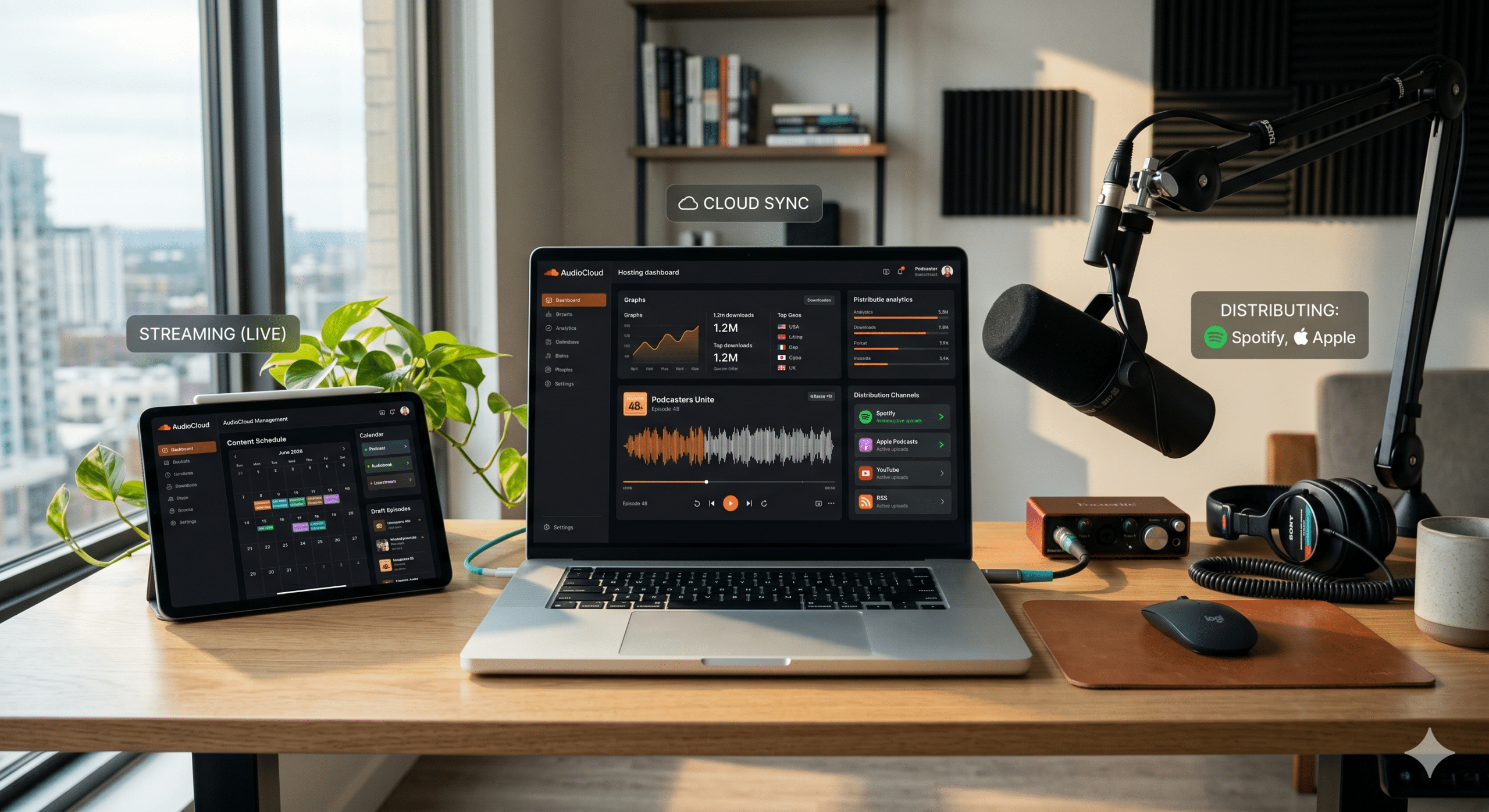
Audio is no longer a side channel—it’s a primary way people consume content. As demand grows, choosing the right platform becomes critical for success. According to a Podcast Hosting Platform Compared Guide in 2026, modern platforms must combine hosting, analytics, and distribution to support long-term growth.
This guide explains what an audio content platform is, why it matters in 2026, and how to choose and use one effectively for growth, SEO, and engagement.
What Is an Audio Content Platform?
An audio content platform is a system or service that enables you to create, manage, publish, distribute, and measure audio-based content. It acts as the central hub for your audio strategy, connecting production workflows with distribution channels and analytics.
Typical capabilities include:
- Hosting and storage for audio files
- Distribution to podcast directories and apps
- Built-in players for websites and apps
- Analytics and audience insights
- Monetization tools (ads, subscriptions)
- Integrations with marketing and CRM systems
In short, it helps you move from scattered audio files to a structured, scalable content operation.
Why Audio Platforms Matter in 2026
The rise of on-demand listening and voice interfaces has made audio a core marketing channel. Here’s why platforms are essential:
1. Centralized Content Management
Instead of juggling multiple tools, you manage everything in one place—from uploads to performance tracking.
2. Scalable Distribution
Publish once and distribute across multiple channels such as podcast apps, websites, and social platforms.
3. Data-Driven Decisions
Access listener behavior, retention, and engagement metrics to improve content quality and targeting.
4. Improved User Experience
Embedded players and fast streaming create a seamless listening experience for your audience.
5. Monetization Opportunities
Platforms often include options for ads, sponsorships, and premium subscriptions.
Key Features to Look For
Not all platforms are equal. Focus on features that support both performance and growth.
1. Reliable Hosting and Streaming
Your platform should offer fast, secure hosting with minimal downtime. Look for global CDN support and adaptive streaming for different devices.
2. Multi-Channel Distribution
Ensure easy distribution to major podcast directories and the ability to embed content on your website.
3. Advanced Analytics
You should be able to track:
- Downloads and listens
- Listener retention
- Device and location data
- Engagement trends
These insights help refine your strategy.
4. SEO Optimization Tools
A strong platform supports:
- Custom titles and descriptions
- Transcripts for indexing
- Metadata optimization
- Embeddable players
5. Monetization Options
Look for features like:
- Dynamic ad insertion
- Subscription models
- Sponsorship integrations
6. Integration Capabilities
Your platform should connect with:
- Email marketing tools
- CRM systems
- Social media platforms
- Content management systems
Types of Audio Platforms
Different use cases require different solutions.
Podcast Hosting Platforms
Designed for creators and brands focused on podcast distribution and growth.
Enterprise Audio Platforms
Built for businesses that need advanced analytics, integrations, and scalability.
Voice Content Platforms
Focused on voice search, conversational content, and smart assistant integration.
All-in-One Content Platforms
Combine audio with video, blogging, and social publishing tools.
How to Choose the Right Platform
Selecting the right tool depends on your goals, audience, and technical needs.
1. Define Your Objectives
Are you aiming for brand awareness, lead generation, or monetization? Your goals will determine the features you need.
2. Understand Your Audience
Consider where your audience listens and what devices they use.
3. Evaluate Ease of Use
Choose a platform with an intuitive interface and simple workflows.
4. Check Scalability
Make sure the platform can grow with your content and audience.
5. Compare Pricing
Look beyond the base price. Consider storage limits, bandwidth, and additional features.
How to Build an Audio Strategy Using a Platform
Step 1: Plan Your Content
Define your themes, formats, and publishing schedule.
Step 2: Produce High-Quality Audio
Invest in clear sound, proper editing, and consistent branding.
Step 3: Upload and Optimize
Add titles, descriptions, keywords, and transcripts for better discoverability.
Step 4: Distribute Widely
Publish across multiple channels to maximize reach.
Step 5: Promote Your Content
Use email, social media, and your website to drive traffic.
Step 6: Analyze and Improve
Use analytics to identify what works and refine your approach.
Best Practices for Success
Focus on Consistency
Regular publishing builds trust and audience loyalty.
Optimize for SEO
Use keyword-rich titles, detailed descriptions, and transcripts.
Repurpose Content
Turn audio into blog posts, social clips, and email content.
Engage Your Audience
Encourage feedback, reviews, and interaction.
Maintain Quality
Clear audio and professional production enhance credibility.
Common Mistakes to Avoid
Choosing the Wrong Platform
A tool that lacks key features can limit growth.
Ignoring Analytics
Without data, you cannot improve performance.
Poor Audio Quality
Low-quality sound drives listeners away.
Inconsistent Publishing
Irregular updates reduce audience retention.
Lack of Promotion
Even great content needs visibility.
SEO and Audio Platforms
A well-optimized audio content platform supports your overall SEO strategy by:
- Increasing indexed content through transcripts
- Improving dwell time and engagement
- Supporting internal linking with embedded audio
- Enhancing keyword relevance through metadata
Audio content complements written content and strengthens your search presence.
Future Trends in Audio Platforms
AI-Powered Production
Automation tools will streamline editing, transcription, and optimization.
Personalized Audio Experiences
Platforms will deliver tailored content based on user behavior.
Voice Integration
Deeper integration with smart assistants and voice search.
Interactive Audio
Listeners will engage directly with content in real time.
How Audio Platforms Fit Into Your Marketing Strategy
An audio content platform should integrate with your broader digital ecosystem:
- SEO: Boost visibility with transcripts and metadata
- Content Marketing: Expand reach through audio formats
- Email Marketing: Share episodes and updates
- Social Media: Promote clips and highlights
This integration ensures consistent messaging and maximizes ROI.
Conclusion
An audio content platform is the foundation of any successful audio strategy in 2026. It enables you to create, manage, distribute, and optimize content efficiently while providing the data needed to improve performance.
By choosing the right platform, focusing on quality, and leveraging SEO best practices, you can build a scalable audio presence that connects with modern audiences and drives long-term growth.
The future of content is not just visual or written—it’s audible. Investing in the right platform today will position your brand for success tomorrow.