

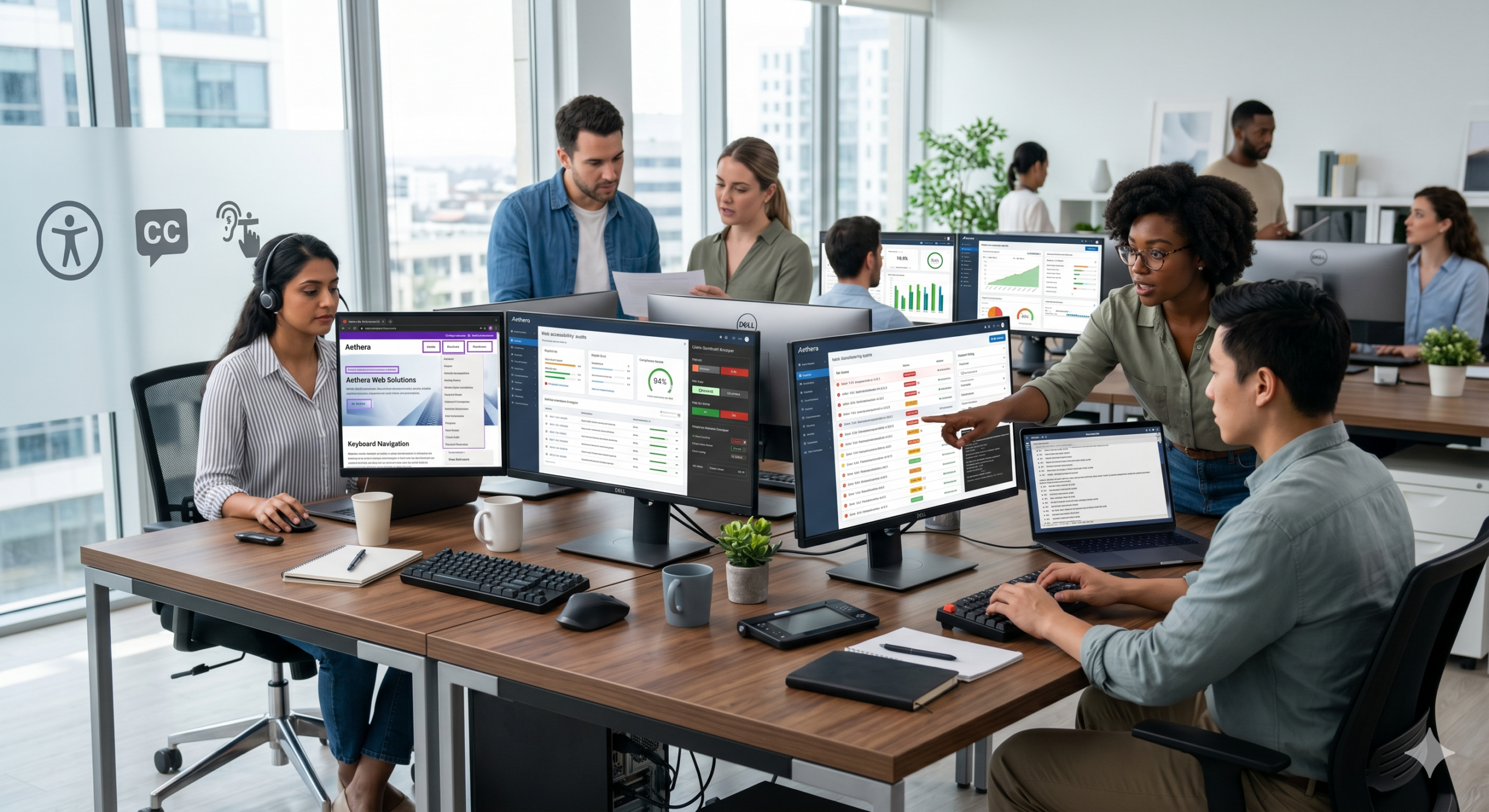
Accessibility audit tools have become essential for building modern, inclusive digital experiences. As websites grow in complexity, ensuring that every user—regardless of ability—can access and interact with content is no longer optional. In particular, organizations must meet accessibility standards while maintaining performance, usability, and compliance.
Over the past few years, accessibility expectations have evolved rapidly. As a result, businesses are now expected to align with recognized standards such as the Web Content Accessibility Guidelines (WCAG). Therefore, using the right audit tools is critical for identifying issues, prioritizing fixes, and maintaining compliance over time.
This guide explores the best accessibility audit tools in 2026, how they work, and how to integrate them into your workflow for long-term success.
What Are Accessibility Audit Tools?
Accessibility audit tools are software solutions designed to evaluate websites and applications for accessibility issues. In essence, they scan digital content and identify elements that do not meet accessibility standards.
These tools help detect issues such as:
- Missing or incorrect alt text
- Poor color contrast
- Broken keyboard navigation
- Improper heading structure
- Inaccessible forms and buttons
In addition, many tools provide actionable recommendations, making it easier for developers and designers to fix problems efficiently.
Why Accessibility Audit Tools Matter in 2026
Legal and Compliance Requirements
Accessibility regulations continue to expand globally. Consequently, businesses must ensure their websites meet compliance standards to avoid legal risks.
Improved User Experience
Accessible websites are easier to navigate. Moreover, usability improvements benefit all users, not just those with disabilities.
SEO Advantages
Search engines prioritize structured, accessible content. For example, proper HTML semantics and alt text improve crawlability. As a result, accessibility contributes directly to better rankings.
Scalable Quality Assurance
Manual testing alone is not enough. Therefore, audit tools allow teams to scale accessibility testing across large and dynamic websites.
Types of Accessibility Audit Tools
Automated Testing Tools
Automated tools scan websites quickly and identify common accessibility issues. As a result, they are ideal for initial audits and continuous monitoring.
Browser-Based Tools
Browser extensions allow developers to test accessibility directly within their workflow. In contrast, full platforms provide more comprehensive reporting.
Continuous Monitoring Platforms
These tools track accessibility over time. Therefore, organizations can detect new issues as content changes.
Assistive Technology Testing Tools
Simulating screen readers and other assistive technologies helps uncover real-world usability issues. In particular, this type of testing reveals gaps that automation may miss.
Key Features to Look for in Accessibility Audit Tools
Choosing the right tool requires careful evaluation. In general, the following features are essential:
Accuracy and Reliability
Tools should minimize false positives. Otherwise, teams may waste time fixing non-critical issues.
WCAG Compliance Support
Ensure the tool supports WCAG 2.1 and 2.2 standards. This way, your audits align with global benchmarks.
Integration Capabilities
Modern workflows require integration with CI/CD pipelines. As a result, accessibility testing becomes part of the development process.
Reporting and Insights
Detailed reports help teams prioritize fixes. Additionally, dashboards provide visibility into progress over time.
Scalability
Large websites require scalable solutions. Therefore, choose tools that can handle multiple pages and environments.
Top Accessibility Audit Tools in 2026
Choosing the right accessibility solution can significantly impact your compliance strategy and development workflow. If you’re comparing multiple platforms, this WCAG audit tools comparison provides a detailed breakdown of the top tools available in 2026 and how they perform in real-world scenarios.
1. axe DevTools
A widely used accessibility testing toolkit for developers. Notably, it integrates with major development frameworks and provides accurate results.
2. WAVE (Web Accessibility Evaluation Tool)
A visual testing tool that highlights accessibility issues directly on web pages. As a result, it is easy to understand and use.
3. Lighthouse (Accessibility Audit)
Built into Chrome DevTools, Lighthouse offers automated accessibility audits. In addition, it combines performance and SEO insights.
4. Siteimprove Accessibility
An enterprise-level platform for continuous monitoring. Therefore, it is ideal for large organizations.
5. Tenon.io
An API-based accessibility testing tool. In particular, it allows developers to integrate accessibility checks into custom workflows.
How to Use Accessibility Audit Tools Effectively
Step 1: Run an Initial Audit
Start by scanning your website. This way, you can identify major accessibility issues quickly.
Step 2: Prioritize Issues
Focus on high-impact problems first. For example, navigation and form accessibility should be addressed immediately.
Step 3: Fix Issues in Code and Design
Implement fixes using best practices. At the same time, ensure that updates do not introduce new issues.
Step 4: Integrate into Development Workflow
Accessibility should be continuous. Therefore, include testing in your CI/CD pipeline.
Step 5: Monitor Regularly
Run audits frequently. Otherwise, new content may create accessibility gaps.
Common Issues Identified by Accessibility Audit Tools
Accessibility tools often highlight recurring problems. For instance, missing alt text and low contrast are among the most common.
Other issues include:
- Inaccessible navigation menus
- Missing form labels
- Improper ARIA usage
- Lack of keyboard support
As a result, fixing these issues improves both compliance and user experience.
Automated vs Manual Accessibility Testing
| Feature | Automated Tools | Manual Testing |
|---|---|---|
| Speed | Fast | Slow |
| Accuracy | Moderate | High |
| Coverage | Partial | Comprehensive |
| Scalability | High | Limited |
In practice, combining both approaches provides the best results.
Accessibility Audit Tools for Different Use Cases
Enterprise Websites
Large organizations require continuous monitoring tools. Therefore, platforms like Siteimprove are ideal.
Small Businesses
Smaller teams benefit from browser extensions and free tools. In contrast, enterprise platforms may be unnecessary.
Developers and QA Teams
Developers need tools that integrate with workflows. As a result, API-based tools are highly valuable.
Future Trends in Accessibility Audit Tools
AI-Powered Testing
Artificial intelligence is improving issue detection. As a result, tools can provide smarter recommendations.
Real-Time Feedback
Modern tools offer instant feedback during development. Therefore, issues can be fixed before deployment.
Integration with Design Systems
Accessibility is being built into design systems. Consequently, teams can prevent issues earlier.
Advanced Assistive Technology Simulation
Tools are becoming better at simulating real user experiences. In turn, this improves testing accuracy.
Best Practices for Accessibility Auditing
- Combine automated and manual testing
- Test with real users when possible
- Keep up with WCAG updates
- Document accessibility processes
- Train your team regularly
Accessibility Audit Checklist
Use this checklist to guide your audits:
- Images have descriptive alt text
- Website is keyboard accessible
- Headings follow proper hierarchy
- Forms are labeled correctly
- Color contrast meets standards
- Screen readers work properly
Conclusion
Accessibility audit tools are essential for building inclusive, compliant, and high-performing websites in 2026. More importantly, they help organizations identify issues, improve usability, and maintain compliance over time.
By combining the right tools with best practices, teams can create digital experiences that work for everyone. Ultimately, accessibility is not just about compliance—it is about delivering better user experiences and long-term value.