


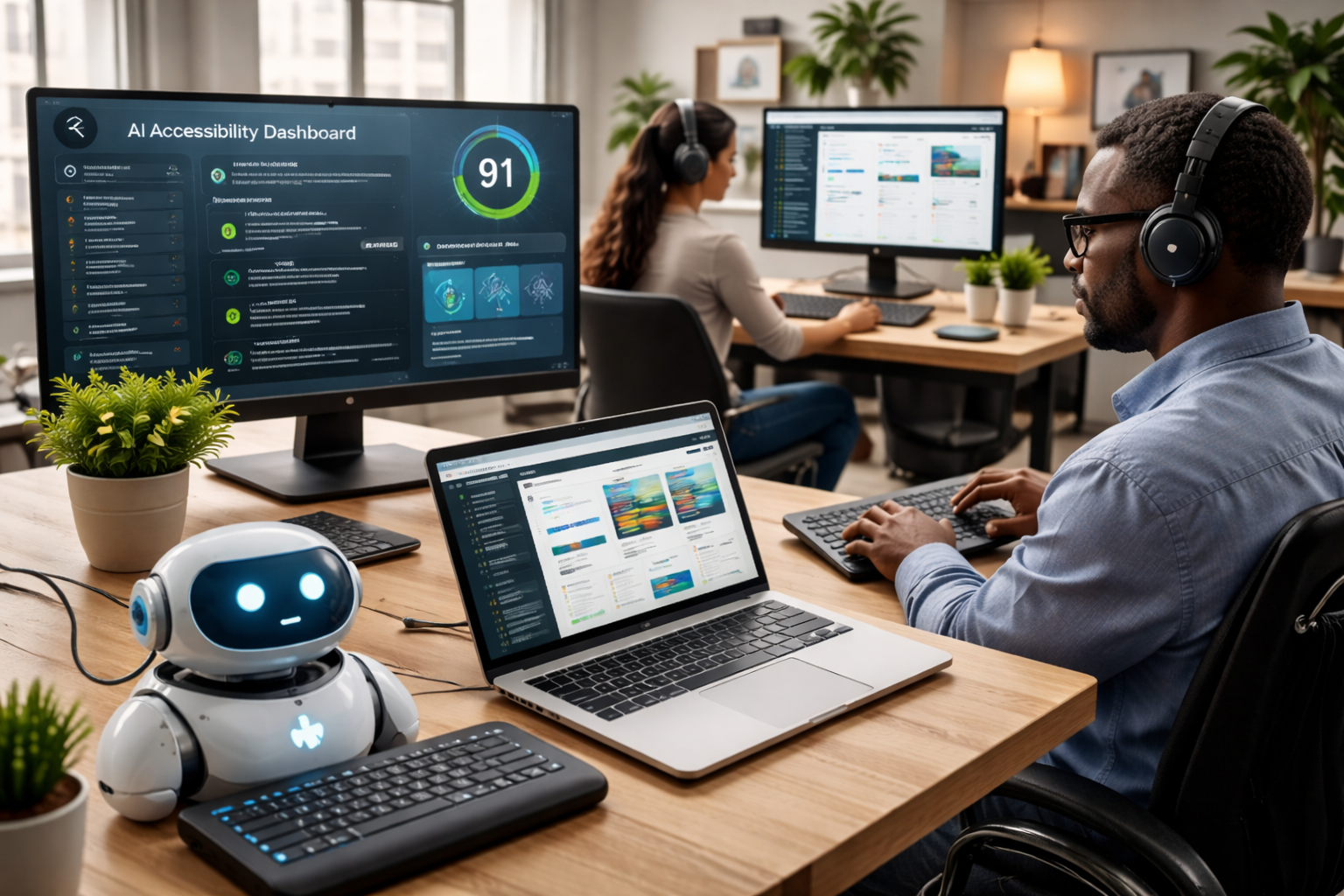
As digital experiences continue to evolve, ensuring accessibility for all users has become essential. AI is transforming how accessibility is implemented across digital platforms, making it faster and more scalable. According to a best AI accessibility tools guide, modern solutions combine automation, machine learning, and real-time analysis to improve usability and compliance.
Artificial intelligence is transforming how accessibility is implemented, making it faster, smarter, and more scalable. Today, the best AI accessibility tools enable businesses and developers to create inclusive digital environments with greater efficiency.
In this guide, we explore leading AI-powered solutions, their features, benefits, and how to choose the right platform for your needs in 2026.
What Are AI Accessibility Tools?
AI accessibility tools are software solutions powered by artificial intelligence that help improve digital accessibility. These systems automate the detection, analysis, and remediation of accessibility issues across websites and applications.
They typically use:
- Machine learning (ML)
- Natural language processing (NLP)
- Computer vision
- Speech recognition
- Automation frameworks
These technologies allow organizations to enhance accessibility faster and more accurately than traditional methods.
Why These Tools Matter
Accessibility is no longer just about compliance—it’s about delivering better user experiences. The best AI accessibility tools help organizations scale accessibility efforts without increasing manual workload.
Key Benefits
- Automation: Reduces manual testing effort
- Accuracy: Detects complex accessibility issues
- Scalability: Works across large digital platforms
- Compliance: Supports WCAG and ADA standards
- User experience: Improves usability for all users
Top AI Accessibility Tools in 2026
Here are some of the most effective solutions available today:
1. accessiBe
Overview:
A widely used platform that automates website accessibility compliance using AI.
Key Features:
- Automated WCAG adjustments
- Real-time monitoring
- Interface customization
Best For:
Small to mid-sized businesses.
2. AudioEye
Overview:
Combines automation with human expertise for accurate accessibility improvements.
Key Features:
- AI issue detection
- Expert validation
- Compliance certification
Best For:
Organizations needing high accuracy.
3. UserWay
Overview:
Provides accessibility widgets powered by AI for quick implementation.
Key Features:
- Screen reader support
- Multilingual capabilities
- Real-time adjustments
Best For:
Fast deployment and ease of use.
4. EqualWeb
Overview:
Offers enterprise-grade accessibility solutions with strong compliance features.
Key Features:
- Automated scanning
- Accessibility overlays
- Reporting dashboards
Best For:
Large organizations and government platforms.
5. axe DevTools
Overview:
A developer-focused tool designed for accessibility testing and debugging.
Key Features:
- CI/CD integration
- Automated audits
- Detailed reports
Best For:
Developers and engineering teams.
6. Google Lighthouse
Overview:
A popular auditing tool that evaluates accessibility, performance, and SEO.
Key Features:
- Accessibility scoring
- Performance insights
- Chrome DevTools integration
Best For:
Developers and SEO professionals.
Key Features to Look For
When evaluating the best AI accessibility tools, consider these capabilities:
Automated Testing
Quick scanning of websites for accessibility issues.
Real-Time Monitoring
Continuous tracking of accessibility performance.
AI-Powered Suggestions
Smart recommendations for fixing issues.
Integration Support
Compatibility with development workflows.
Reporting and Analytics
Detailed insights for improvement.
How These Tools Work
AI accessibility solutions typically follow this process:
- Scanning: Analyze web content
- Detection: Identify accessibility issues
- Analysis: Categorize problems
- Remediation: Suggest or apply fixes
- Monitoring: Track ongoing compliance
This workflow ensures continuous accessibility improvement.
Real-World Applications
Web Development
Developers rely on the best AI accessibility tools to ensure accessibility during coding.
- Pre-launch audits
- Code validation
- Continuous integration
E-Commerce
Online platforms use AI accessibility solutions to improve usability.
- Accessible navigation
- Inclusive checkout
- Better product descriptions
Corporate Websites
Businesses enhance user experience with accessibility-focused tools.
- Improved readability
- Better navigation
- Accessible content
Government Platforms
Public websites require strict accessibility compliance.
- Regulatory adherence
- Inclusive service delivery
- Accessibility audits
Challenges and Limitations
Despite their benefits, AI accessibility tools have limitations:
- Incomplete detection: Not all issues can be automated
- False positives: Some results require manual review
- Cost: Advanced solutions can be expensive
- Human oversight needed: AI cannot replace manual testing بالكامل
A hybrid approach delivers the best results.
Future Trends
The future of accessibility technology is rapidly evolving.
AI-Driven Automation
More advanced automatic fixes.
Predictive Accessibility
Identifying issues before they occur.
Real-Time Feedback
Instant developer insights.
Multimodal Interaction
Voice, gesture, and visual inputs.
Built-In Accessibility
Accessibility integrated into all platforms.
Best Practices
To maximize results:
- Combine AI and manual testing
- Test throughout development
- Prioritize critical issues
- Train your team
- Stay updated with standards
Conclusion
The best AI accessibility tools are transforming digital inclusion by making accessibility more efficient and scalable. These solutions empower organizations to create better user experiences while meeting compliance requirements.
As we move into 2026, adopting AI-powered accessibility solutions is essential for building inclusive, future-ready digital platforms.