


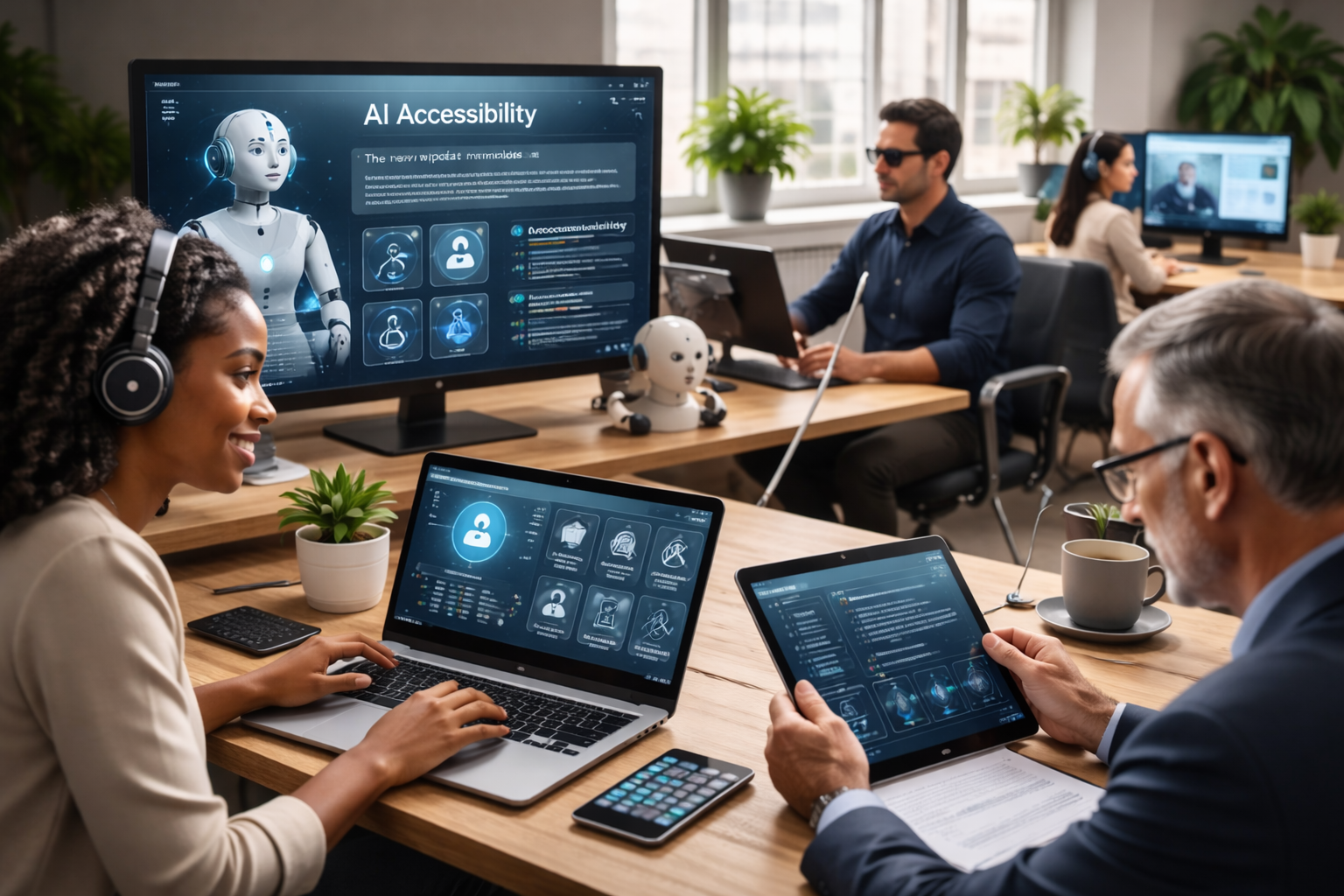
Artificial intelligence is redefining how people interact with digital platforms, and one of its most powerful applications is in accessibility. AI for digital accessibility is helping remove barriers, enabling individuals with disabilities to access content, services, and tools more easily than ever before.
From intelligent screen readers to real-time transcription and adaptive interfaces, AI is transforming digital experiences into more inclusive, user-friendly environments. In this expert guide, we explore how AI-driven accessibility works, its benefits, applications, and why it is essential in 2026.
What Is AI for Digital Accessibility?
AI for digital accessibility refers to the use of artificial intelligence technologies to improve access to digital content and systems for people with disabilities. These technologies include:
- Machine learning (ML)
- Natural language processing (NLP)
- Computer vision
- Speech recognition
- Predictive analytics
The goal is to ensure that digital platforms are usable by individuals with visual, auditory, cognitive, or motor impairments.
Why AI for Digital Accessibility Matters
Accessibility is no longer optional—it is a critical part of modern digital strategy. Organizations that invest in AI for digital accessibility can enhance user experience while meeting compliance standards.
Key Benefits
- Improved usability: Makes digital content easier to navigate
- Greater independence: Reduces reliance on assistance
- Enhanced engagement: Improves user satisfaction
- Regulatory compliance: Supports WCAG and global standards
- Wider reach: Expands access to diverse audiences
Inclusive technology is not just ethical—it drives innovation and growth.
Core Technologies Behind AI Accessibility
1. Speech Recognition
AI-powered speech recognition allows users to interact with devices using voice commands.
- Voice typing
- Hands-free navigation
- Real-time transcription
This technology is especially useful for users with mobility challenges.
2. Natural Language Processing (NLP)
NLP enables systems to understand and generate human language.
- Text simplification
- Context-aware responses
- Language translation
It improves accessibility for users with cognitive or language-related difficulties.
3. Computer Vision
Computer vision helps AI interpret visual content.
- Image recognition
- Scene description
- Facial detection
This allows visually impaired users to understand images and environments.
4. Machine Learning
Machine learning enables systems to learn from user behavior.
- Personalized experiences
- Adaptive interfaces
- Predictive recommendations
This improves usability over time.
Key Features of AI for Digital Accessibility
Intelligent Screen Readers
Modern screen readers use AI to provide more natural and accurate audio output.
- Context-aware reading
- Dynamic content handling
- Improved navigation
Real-Time Captioning
AI-powered captioning converts speech into text instantly.
- Supports deaf and hard-of-hearing users
- Enhances video accessibility
- Improves communication
Automated Image Descriptions
AI can generate alt text for images automatically.
- Improves accessibility for visual content
- Saves time for developers
- Enhances SEO
Voice Assistants
Voice-enabled systems allow users to control devices easily.
- Task automation
- Smart navigation
- Personalized assistance
Adaptive User Interfaces
AI adjusts interfaces based on user preferences.
- Custom layouts
- Adjustable font sizes
- Personalized navigation
How AI Improves Digital Accessibility
AI enhances accessibility by automating complex tasks and improving user experiences across digital platforms. As explained in a guide on AI for accessibility benefits and limitations, modern systems can detect barriers, recommend fixes, and streamline accessibility workflows while still requiring human oversight for complete accuracy.
1. Automation of Accessibility Tasks
AI can automatically detect and fix accessibility issues.
- Identify missing alt text
- Adjust color contrast
- Improve navigation structures
2. Personalization
AI tailors experiences to individual needs.
- Customized content delivery
- Adaptive learning systems
- User-specific recommendations
3. Real-Time Assistance
AI provides instant support during interactions.
- Live captions
- Voice guidance
- Smart suggestions
4. Continuous Improvement
AI systems learn and improve over time.
- Better accuracy
- Reduced errors
- Enhanced user experience
Real-World Applications
Education
AI is making education more accessible.
- Voice-assisted learning
- Real-time captions in lectures
- Personalized learning paths
Workplace
Organizations use AI to create inclusive work environments.
- Automated meeting transcription
- Accessible communication tools
- Voice-controlled workflows
Healthcare
Accessibility is critical in healthcare.
- AI-assisted patient communication
- Accessible telehealth platforms
- Voice-enabled systems
E-Commerce
AI improves accessibility in online shopping.
- Voice navigation
- Automated product descriptions
- Accessible checkout processes
Challenges and Limitations
Despite its benefits, AI for digital accessibility faces challenges:
- AI bias: May not work equally for all users
- Data privacy concerns: Sensitive data handling
- Cost of implementation: Advanced tools can be expensive
- Incomplete automation: Some issues require human input
A balanced approach combining AI and human expertise is essential.
Future Trends in AI Accessibility
The future of AI accessibility is rapidly evolving.
1. Hyper-Personalization
AI will adapt experiences in real time based on user behavior.
2. Multimodal Interaction
Combining voice, gesture, and visual inputs.
3. Edge AI
Reducing reliance on cloud processing for faster performance.
4. Emotion-Aware Systems
AI will respond to user emotions for better interaction.
5. Built-In Accessibility
Accessibility features will become standard in all digital products.
Best Practices for Implementing AI Accessibility
To maximize the benefits of AI-driven accessibility:
- Conduct regular accessibility audits
- Involve users with disabilities in testing
- Use both automated and manual testing
- Stay updated with accessibility standards
- Continuously improve AI models
Accessibility is an ongoing commitment.
Conclusion
AI for digital accessibility is transforming how people interact with technology. By leveraging artificial intelligence, organizations can create inclusive digital experiences that empower users and drive innovation.
As we move into 2026, accessibility will become a core component of digital success. Businesses that invest in AI-driven accessibility solutions will not only meet compliance requirements but also lead in creating a more inclusive digital world.